Easy Bucatini all'Amatriciana Recipe (Authentic Roman Pasta)
If you're looking for an authentic Roman pasta recipe that's easy enough for a weeknight but special enough for date night, Bucatini all'Amatriciana is the one to make tonight 🍝. This traditional Roman dish packs incredible flavor into just five simple ingredients, and you can easily make it at home — no trip to Rome required (though if you know me, you know I'd take that trip in a heartbeat).
Why I Can't Get Enough of Roman Cuisine
If you know me, you know I have a deep love for Roman cooking. There's something about the cucina romana philosophy — a handful of humble ingredients, treated with technique and respect, turning into something unforgettable — that I find more inspiring than the fussiest tasting menu. Rome doesn't need twenty ingredients to make magic. It needs guanciale, tomatoes, pecorino, and confidence.
That's exactly what's happening in this dish: one of Rome's quintessential pasta classics, and a perfect introduction to authentic Roman pasta recipes if you haven't tried one yet.
What Is Bucatini all'Amatriciana?
Bucatini all'Amatriciana is a classic Roman pasta dish made with guanciale (cured pork jowl), tomatoes, pecorino cheese, and a splash of white wine, tossed with bucatini — a thick, hollow pasta that catches the sauce beautifully. The dish takes its name from Amatrice, a small town in the Lazio region near Rome, though today it's most closely associated with Roman cuisine. It's one of the four pillars of Roman pasta, alongside carbonara, cacio e pepe, and gricia (amatriciana's tomato-free predecessor).
Why This Roman Pasta Recipe Works
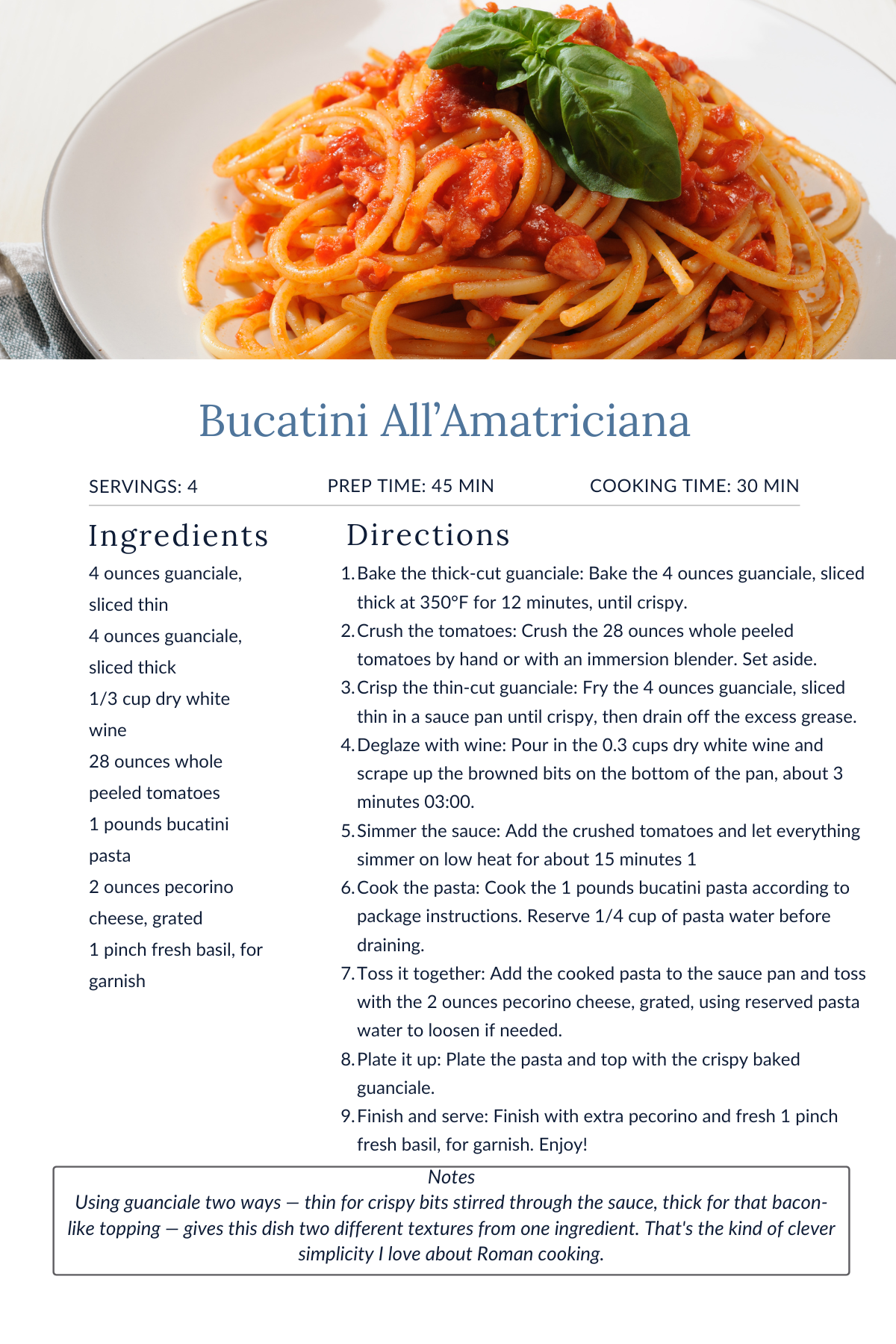
What makes amatriciana so special is how much flavor it gets from so little. There's no garlic, no onion, no herbs doing the heavy lifting — just guanciale rendered until crisp, deglazed with wine, simmered with tomatoes, and finished with sharp, salty pecorino. This recipe uses guanciale two ways: thinly sliced and fried into the sauce for richness throughout, and thickly sliced and baked separately for a craggy, crispy topping. Two textures, one ingredient — that's the kind of clever simplicity I love about Roman cooking.
Ingredient Notes: Guanciale, Pecorino & Bucatini
Guanciale is cured pork jowl, and it's the heart of this dish. If you can't find it, pancetta is the most common substitute, though the flavor will be slightly leaner and less rich.
Pecorino cheese (specifically Pecorino Romano) brings the sharp, salty finish that's essential to Roman pasta dishes. Parmesan can work in a pinch, but it won't taste the same.
Bucatini is a thick, tubular pasta with a hollow center that's traditional for this dish, though spaghetti or rigatoni are easy substitutes if that's what you have on hand.
Frequently Asked Questions
Can I use pancetta instead of guanciale? Yes — pancetta is the most common substitute and is much easier to find at regular grocery stores. It's leaner than guanciale, so the sauce will be slightly less rich, but still delicious.
What's the difference between amatriciana and arrabbiata? Amatriciana is made with pork (guanciale or pancetta) and is not traditionally spicy. Arrabbiata is a vegetarian, chili-forward tomato sauce with no meat at all.
Can I make this with a different pasta shape? Bucatini is traditional, but rigatoni, spaghetti, or penne all work well if that's what's in your pantry.